


Views: 0 Author: Site Editor Publish Time: 2025-09-11 Origin: Site


In plastic processing, achieving uniform dispersion and complete melting of polymers and additives is critical to producing high-quality end products. Variations in temperature, inconsistent mixing, or poor dispersion can lead to defects such as color streaks, weak mechanical properties, uneven texture, or surface imperfections. This is especially true in twin screw extruders, where materials often contain multiple components, such as fillers, fibers, pigments, stabilizers, or recycled content.
Mixing elements are specifically designed to address these challenges. They create controlled shear, redistribute materials, and ensure homogeneity throughout the extrusion process. By carefully managing the interaction between polymer melts and additives, mixing elements enhance material uniformity, melt quality, and process stability. Their proper use allows manufacturers to maintain consistent quality across batches, reduce waste, and optimize production efficiency.
Furthermore, as extrusion lines increasingly handle complex or high-performance polymers, the role of mixing elements becomes even more essential. Effective mixing ensures that functional additives are evenly dispersed, melting is thorough, and the final product exhibits the desired mechanical, thermal, and aesthetic properties. Without well-designed mixing elements, extrusion lines risk material inconsistencies, equipment stress, and reduced overall productivity.
Mixing elements are specialized screw components in twin screw extruders designed to enhance the dispersion of additives, fillers, and polymers while ensuring uniform melting. Unlike conveying elements that primarily transport material or kneading blocks that provide shear and pressure for melting, mixing elements focus on achieving homogeneous material distribution throughout the extrusion process. They are essential in plastic processing where consistent quality and precise material blending are critical.
There are several common types of mixing elements used in extrusion lines, each tailored to specific processing needs:
SME (Standard Mixing Elements):
SME elements utilize multiple backflow grooves that create controlled recirculation within the extruder. This promotes effective dispersion of additives with low energy consumption, making SME elements ideal for standard polymers and general-purpose mixing tasks.
TME (Toothed Mixing Elements):
TME elements feature paired forward and reverse teeth that interlock to generate moderate shear and improved mixing. They balance dispersion efficiency with energy usage, suitable for polymers with moderate viscosity or materials containing fillers that require controlled homogenization.
ZME (Z-shaped Mixing Elements):
ZME elements employ a staggered angle cutting design, providing high shear and intensive dispersion. While slightly more energy-intensive, they are highly effective for challenging polymers, highly filled compounds, or fiber-reinforced materials, ensuring uniform melting and complete additive integration.
Reverse Teeth: Many mixing elements incorporate backward-facing teeth or paddles to enhance recirculation and material backflow, improving blending efficiency without excessive energy consumption.
Staggered Angle Design: The angled arrangement of mixing teeth ensures thorough interaction between polymer streams, promoting uniform dispersion and preventing dead zones within the extruder.
Modular Integration: Mixing elements can be arranged in series or combined with kneading and conveying elements to achieve customized processing profiles for specific polymers or compounds.
By carefully selecting and configuring SME, TME, or ZME mixing elements, manufacturers can achieve consistent melt quality, uniform additive distribution, and reliable extrusion performance. Proper design and integration of mixing elements reduce material defects, improve mechanical and aesthetic properties of extruded products, and enhance overall line efficiency.
In twin screw extrusion, dispersion plays a vital role in determining the quality, appearance, and mechanical properties of plastic products. Effective dispersion ensures that additives, pigments, and fillers are evenly distributed throughout the polymer matrix, preventing defects such as streaks, clumps, or inconsistent color. It is important to distinguish between two aspects of mixing:
Dispersive Mixing:
Dispersive mixing focuses on breaking down agglomerates or clusters of additives, pigments, or fillers into smaller, evenly distributed particles. This type of mixing is critical for achieving a uniform material structure at the microscopic level. For example, pigments in colored plastics must be fully dispersed to prevent color variations or streaking. Mixing elements like TME and ZME are particularly effective for dispersive mixing due to their staggered angle teeth and high shear design, which actively separate agglomerates and promote uniform particle distribution.
Distributive Mixing:
Distributive mixing ensures that all components are evenly spread throughout the melt without necessarily reducing particle size. It focuses on the macro-level uniformity of materials, ensuring that fibers, fillers, or additives are consistently present in every part of the extruded product. SME elements with multiple backflow grooves are commonly used to enhance distributive mixing with low energy consumption, providing thorough but gentle distribution suitable for standard polymers.
Achieving Uniform Dispersion of Pigments and Fillers:
Mixing elements are designed to combine both dispersive and distributive mixing actions. The angled or staggered teeth, along with reverse-flow paddles, create controlled turbulence and recirculation within the extruder. This movement allows pigments, fillers, and other additives to blend seamlessly into the polymer matrix, avoiding local concentration differences. The combination of shear, backflow, and controlled residence time ensures:
Even color distribution in colored plastics.
Uniform filler incorporation for enhanced mechanical or thermal properties.
Prevention of clogging or stagnation in highly filled or high-viscosity polymers.
By optimizing the geometry and placement of SME, TME, and ZME mixing elements, manufacturers can achieve superior dispersion, reduce material waste, and improve the final product’s quality and consistency. Properly configured mixing elements also help maintain stable pressure and temperature profiles in the extruder, further enhancing melting efficiency and extrusion performance.
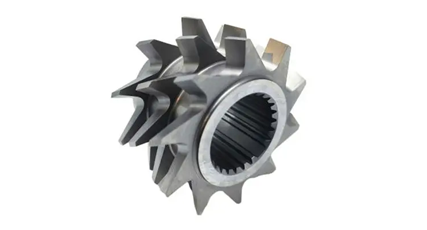
Mixing elements play a crucial role not only in dispersion but also in enhancing melting efficiency in twin screw extruders. Uniform melting is essential in plastic processing to ensure that polymers reach the desired viscosity, additives are properly integrated, and the final product maintains consistent mechanical and aesthetic properties. Poor melting can lead to localized overheating, incomplete polymer fusion, or uneven texture, which compromise product quality and increase production costs.
Mixing elements, such as SME, TME, and ZME, are specifically designed to generate controlled shear and recirculation, which helps maintain a consistent temperature throughout the extruder. By promoting efficient heat transfer, these elements ensure that all polymer particles melt uniformly, preventing the formation of hot or cold spots. The combination of dispersive and distributive mixing mechanisms allows the material to move evenly across the screw length, optimizing thermal energy use and preventing degradation caused by excessive localized heat.
Properly designed mixing elements also contribute to reducing energy consumption. Uniform melting and efficient material flow reduce the extruder’s resistance, minimizing the torque required to drive the screws. This results in lower motor load and energy usage, particularly when processing high-viscosity or heavily filled compounds. ZME elements, for instance, provide high shear for difficult-to-melt materials, ensuring complete fusion without unnecessary energy expenditure, while SME elements deliver gentle but effective mixing for standard polymers, saving energy over long production runs.
By improving melting efficiency, mixing elements help achieve a homogeneous melt with consistent viscosity, which is critical for downstream processes such as extrusion, molding, or calendering. Uniformly melted polymers ensure that fillers, pigments, and additives are properly integrated, resulting in better surface finish, mechanical performance, and dimensional stability. Additionally, consistent melting reduces the risk of equipment wear caused by uneven polymer flow, contributing to longer extruder life and lower maintenance requirements.
In summary, mixing elements are indispensable for improving melting efficiency in plastic processing. They ensure even temperature distribution, uniform polymer fusion, and optimal energy usage, while supporting consistent product quality and enhancing the overall performance of extrusion lines. Correct selection and placement of SME, TME, or ZME mixing elements are key to achieving these benefits, allowing manufacturers to optimize both production efficiency and material utilization.
Selecting the appropriate mixing element is crucial for achieving optimal dispersion, melting, and overall extrusion performance. The choice depends largely on the material properties, polymer viscosity, and presence of additives or fillers.
SME (Standard Mixing Elements): Ideal for general-purpose polymers and applications where low to moderate shear is sufficient. SME elements are energy-efficient and effective for dispersive and distributive mixing in standard plastics, pigments, and lightly filled compounds.
TME (Toothed Mixing Elements): Suitable for moderately viscous polymers or compounds containing fillers, TME elements provide controlled shear through forward and reverse tooth pairs. They ensure balanced dispersion and melting without excessive energy consumption.
ZME (Z-shaped Mixing Elements): Designed for highly viscous or fiber-reinforced materials, ZME elements deliver high shear and intensive dispersion. They are perfect for applications requiring thorough blending of challenging polymers, pigments, and fillers, achieving uniform melting and consistent product quality.
When selecting a mixing element, manufacturers should also consider screw configuration, processing temperature, extrusion speed, and residence time. Correct placement and combination with other screw elements, such as conveying elements and kneading blocks, can further optimize mixing efficiency, reduce material degradation, and enhance the final product’s mechanical and aesthetic properties.
Effective mixing elements are essential for producing high-quality plastic products with consistent color, texture, and mechanical performance. By selecting the right SME, TME, or ZME element and integrating it properly into the extruder, manufacturers can improve dispersion, achieve uniform melting, reduce defects, and optimize overall production efficiency.
Gendrre’s precision-engineered mixing elements offer reliable performance, durability, and seamless compatibility with other screw components, making them an ideal choice for extrusion lines across the plastic processing industry.
For manufacturers seeking to enhance product quality, reduce downtime, and achieve consistent extrusion results, exploring Gendrre’s range of mixing element solutions is the first step toward optimized operations. Visit www.gendrre.com or contact the Gendrre team directly to learn more about customized solutions that can improve your plastic processing efficiency and output quality.


