


Views: 0 Author: Site Editor Publish Time: 2026-07-15 Origin: Site


Replacing or upgrading an extruder barrel represents a major capital expenditure decision. It directly impacts line uptime and resin shear quality. It also heavily dictates your annual maintenance budgets. Traditionally, plants relied on solid single-piece cylinder designs. Today, engineers increasingly shift toward modular solutions for complex compounding operations. This structural evolution accommodates varying Length/Diameter (L/D) requirements effortlessly. We see this transition accelerating across modern plastics processing facilities globally. Adapting to diverse polymer recipes demands flexible equipment configurations. However, specifying these advanced systems requires rigorous technical scrutiny from decision-makers. The purpose of this article is to provide engineering and procurement teams an evaluation framework. You will learn the strict criteria for specifying and purchasing combination barrels for extruders. We outline how to assess metallurgy, verify machining tolerances, and mandate quality documentation. Implementing these strategies ensures reliable performance under demanding processing conditions.
Modularity Drives ROI: Combination barrels reduce long-term costs by allowing targeted replacement of high-wear zones rather than scrapping the entire unit.
Metallurgy is Non-Negotiable: The choice of a modular barrel liner must strictly align with the abrasive or corrosive nature of the specific polymer being processed.
Alignment Dictates Performance: Poorly machined seams between combination sections lead to material hang-up, degradation, and rapid screw wear.
Vendor Accountability: Credible suppliers provide transparent material certifications (e.g., mill test reports) and verifiable engineering tolerances.
Solid barrels force operators into costly full-replacements. Even if only the high-pressure metering zone wears out, you must scrap the whole unit. This rigid approach destroys operational maintenance budgets quickly. Modular systems solve this inherent structural inefficiency directly. They break the cylinder down into distinct functional sections. You typically see feed, mixing, venting, and metering zones separated physically. Flanges or heavy-duty tie-rods clamp these segments together securely.
This segmentation allows for highly targeted component replacement. When compounding abrasive fillers, the mixing section deteriorates fastest. Modularity lets you swap just that specific section. You preserve the intact feed and venting zones safely. For example, processing highly filled nylon demands robust wear protection. When processing these materials in a solid system, localized wear near the discharge end ruins the entire capital asset. Combination configurations isolate this damage. You contain the wear to a short, replaceable segment. Engineers can easily calculate the cost avoidance of swapping a small section versus a three-meter solid cylinder.
Combination setups demand a higher initial acquisition cost. Precision machining of multiple flanged ends drives up manufacturing expenses. However, they deliver dramatically lower long-term financial burdens. Plants running aggressive compounds see rapid financial returns. You only replace the exact segment failing from severe abrasion.
Still, we must acknowledge strict application constraints. Lab-scale extruders might require different structural approaches due to size limits. Highly specialized legacy lines often lack the spatial footprint for bulky flanges. Do not assume modularity serves as a universal fix for every facility. Evaluate your specific machine footprint before committing to a redesign. Consider the physical space needed for tensioning tools during assembly.
Wear resistance standards demand strict attention during specification. You must match the liner material precisely to your process environment. Fillers like calcium carbonate or titanium dioxide cause severe abrasive wear. Fluoropolymers and PVC induce extreme corrosive wear at elevated temperatures. Choosing the wrong alloy guarantees premature equipment failure. It also risks contaminating the polymer melt with metallic flakes.
Engineers typically evaluate two primary liner technologies during procurement.
Bimetallic Liners: These excel under heavy abrasive loads and high shear forces. Manufacturers spin-cast a super-hard alloy inside a tough steel backing shell. You must assess the thickness of this centrifugal cast layer carefully. Evaluating the metallurgical bonding strength between the layers is equally critical. Poor bonding leads to catastrophic delamination under high pressure.
Nitrided Liners: These remain cost-effective for processing general-purpose resins. They perform exceptionally well for non-abrasive standard polymers. However, they possess a limited wear-depth lifespan inherently. The hardened surface only penetrates a few thousandths of an inch. Once the screw wears through this case-hardened skin, degradation accelerates rapidly.
For extreme environments, some operators specify tungsten carbide encapsulated liners. These provide the ultimate defense against aggressive glass fibers. Conversely, processing fluoropolymers requires highly specialized corrosion defense. Alloys containing high nickel and chromium content become necessary. While expensive, they prevent halogen-induced pitting.
Buyers must adopt an evidence-oriented approach to material verification. Demand verified metallurgical certifications from your vendors before accepting delivery. Mill test reports prove the alloy's true chemical composition conclusively. This paperwork prevents suppliers from selling inferior base steel dressed up as high-grade alloy. A high-quality modular barrel liner requires documented material integrity to function reliably. Insist on knowing the exact Rockwell Hardness (HRC) ratings for each segment.
Comparison of Liner Metallurgical Profiles | |||
Liner Technology | Primary Resistance | Best Application Profile | Lifespan Constraint |
|---|---|---|---|
Bimetallic (Tungsten Carbide) | Extreme Abrasion | >30% Glass-filled polymers | Depends on cast layer thickness |
Nitrided Steel | Moderate Wear | Virgin polyethylene, general resins | Shallow hardened depth limit |
Nickel-Chromium Clad | Extreme Corrosion | Fluoropolymers, rigid PVC | High initial procurement cost |
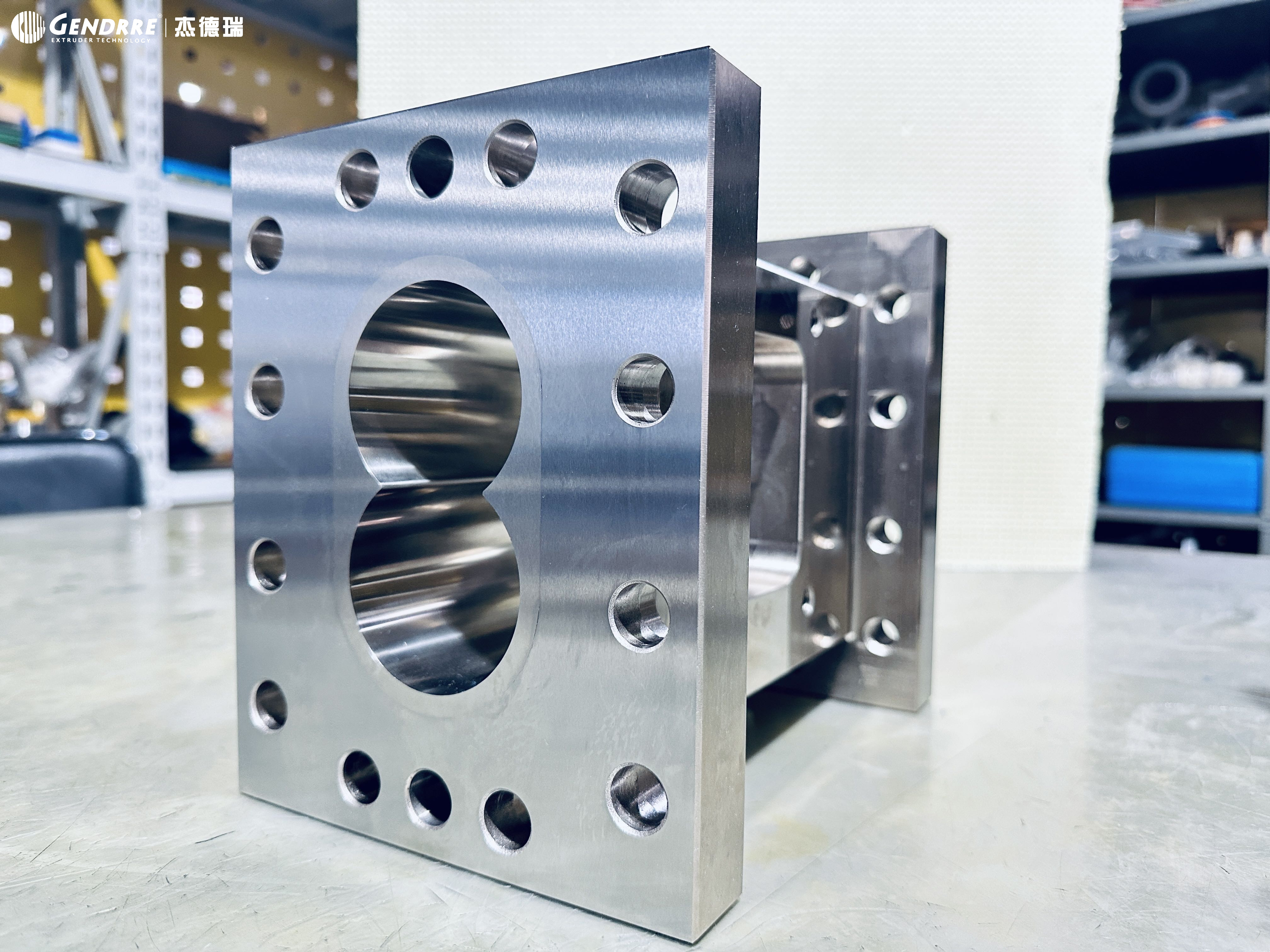
Modularity inherently introduces physical seams into the sensitive melt stream. If manufacturing tolerances remain loose, minor geometric steps form at the joints. These microscopic steps cause severe material stagnation over time. Polymers hang up, overheat, and degrade into carbonized black specks. Misalignment also accelerates premature screw wear across the boundary transitions. The screw flights will rub against the misaligned cylinder walls, causing severe galling.
Parallel twin-screw specifications require intensive scrutiny from quality inspectors. You must verify center-distance tolerances meticulously between the two bores. Figure-eight bore concentricity dictates fluid dynamics inside the mixing chamber. Even a thousandth of an inch deviation creates excessive shear stress locally. This uneven stress degrades temperature-sensitive polymers almost instantly.
Thermal expansion dynamics further complicate modular engineering designs. Standard operating temperatures cause significant metal expansion radially and axially. Buyers must ask vendors how their designs account for this thermal growth. Different bolted sections expand at varying rates during high-heat operation. Precision engineering ensures flanges do not warp or leak under thermal load. Properly designed cooling channels must align perfectly across every joint. Rigorously engineered custom extruder barrels maintain perfect concentricity even at 300°C.
Tie-rod systems require specific hydraulic tensioning tools to achieve uniform compression. If one side of a flange is torqued tighter than the other, the bore will skew. This skewing forces the rotating screw to deflect. Screw deflection leads to immediate metal-to-metal contact. The resulting friction can destroy a brand-new setup within hours. Engineers must provide exact torque sequencing charts for the assembly technicians.
Request comprehensive pre-shipment dimensional inspection reports for every flange.
Ensure precision dowel pins are utilized for exact flange alignment.
Specify match-machining for contiguous segments to eliminate step-offs.
Ignoring thermal expansion coefficients when mixing different steel alloys.
Failing to torque tie-rods evenly during the installation phase.
Neglecting to clean mating surfaces thoroughly before final assembly.
Maintenance teams must implement strict physical inspection protocols regularly. Relying solely on operator intuition is a dangerous practice. Using specialized dial bore gauges is absolutely mandatory. Borescopes provide critical visual confirmation of internal surface conditions. Inspectors must focus heavily on the transitional seams between sections. This boundary is where mechanical failure typically originates first.
When measuring the inner diameter, technicians must take readings at multiple clock positions. Measuring at 12, 3, 6, and 9 o'clock identifies uneven wear patterns. Ovality in the bore indicates the screw is lifting or pushing to one side. This is highly common in high-pressure metering zones. Documenting this ovality helps engineers redesign the screw profile to balance internal pressure.
Predictive maintenance strategies prevent catastrophic line shutdowns effectively. We recommend establishing a rigorous measurement framework for your equipment. Track wear over distinct operating time intervals. This historical data predicts exactly when specific modular sections will fail. Ordering replacement parts months ahead of time avoids unplanned downtime completely. It eliminates the panic of expedited shipping and rush manufacturing fees.
We must transparently address inherent cleaning challenges. Segmented cylinder designs can be slightly more difficult to clean manually. If joint integrity becomes compromised, polymer seeps into microscopic gaps. Standard purging compounds might struggle to remove this trapped resin fully. Therefore, regular torque checks on connecting bolts remain critical for sealing. Properly maintained extruder combination barrels minimize these frustrating cleaning hurdles significantly.
Predictive Maintenance Schedule Framework | |||
Operational Hours | Inspection Action | Primary Focus Area | Tools Required |
|---|---|---|---|
1,000 Hours | Visual Inspection | Flange joints, exterior purge points | Borescope, High-lumen Flashlight |
3,000 Hours | Dimensional Check | Feed and Venting zones | Dial Bore Gauge, Micrometers |
6,000 Hours | Deep Wear Analysis | Metering and Mixing sections | Multi-axis Bore Gauge, Borescope |
12,000 Hours | Section Replacement | Highest wear segments identified | Alignment Lasers, Torque Wrenches |
Sourcing reliable equipment requires evaluating core engineering capabilities thoroughly. Does the vendor offer sophisticated reverse-engineering for legacy machines? Or do they only supply standard off-the-shelf components for modern brands? Complex compounding applications often demand custom engineering solutions. A capable manufacturer sends engineers to your facility for onsite spatial measurements.
Quality Assurance (QA) documentation separates reputable suppliers from average machine shops. Insist on receiving comprehensive QA reports prior to the final shipment. These documents must detail exact bore straightness measurements across the entire length. You need complete dimensional inspection reports covering every single bolt hole. Pressure-test results for cooling jackets are absolutely non-negotiable. Coolant leaks destroy polymer melt stability and create severe safety hazards.
Evaluate lead times against actual physical stock levels realistically. Supply chain delays present a harsh reality in today's industrial market. Rate vendors based on their ability to inventory standard modular sections. Holding critical segments in stock enables rapid emergency replacements. Ask potential partners about their warehousing strategies for bimetallic blanks.
Consider mandating a Factory Acceptance Test (FAT) for large custom orders. During a FAT, you can witness the pressure testing of the cooling jackets firsthand. You can verify the dowel pin fitment before the unit ever leaves the supplier's dock. This level of vendor accountability eliminates unpleasant surprises during installation.
Verify Reverse-Engineering Capacity: Ensure they can accurately map existing legacy mounting footprints.
Mandate Mill Test Reports: Confirm raw material alloy composition before any machining begins.
Audit QA Protocols: Demand documented hydrostatic pressure tests for all liquid cooling jackets.
Check Emergency Inventory: Ask exactly how many standard segment blanks they keep stocked locally.
Review Torque Specifications: Ensure they provide comprehensive assembly manuals detailing sequential bolt tensioning.
Purchasing segmented cylinders requires strategic foresight and rigorous evaluation. You must balance upfront metallurgical investments against long-term maintenance savings. Cheaper initial quotes often hide inferior steel and loose machining tolerances. Investing in precision engineering protects your downstream product quality consistently.
We strongly advise buyers to audit their current machine wear patterns carefully. Identify the exact zone failing most frequently on your solid cylinders. Do this before you ever request a formal manufacturing quote. This empirical data informs exactly which modular segments need premium bimetallic reinforcement.
Take action today to protect your production capabilities against unnecessary downtime. Contact a qualified engineering team for a comprehensive wear-analysis consultation. Request a custom blueprint review to evaluate how modularity fits your specific floorplan. Upgrading your extrusion lines with precision-engineered sections guarantees operational resilience for years.
A: Yes, but it requires calculating space for flanges/tie-rods and ensuring the existing drive and frame can support the modular assembly.
A: Typically every 6 to 12 months, though highly abrasive processes (like >30% glass fiber) may require quarterly bore gauging.
A: While most common in twin-screw (co-rotating) setups due to complex compounding needs, they are absolutely applicable and beneficial for large single-screw operations processing abrasive materials.


