


Views: 0 Author: Site Editor Publish Time: 2026-06-22 Origin: Site


Many operators view an extruder barrel merely as a passive container for melting plastics. You should instead recognize it as a highly critical thermal and pressure-containment vessel. It directly determines melt quality and overall production viability. When misalignment occurs, you face severe mechanical consequences. Poor material selection or unrecognized internal wear quickly causes severe polymer degradation. Process surging follows close behind, generating unacceptable scrap rates and lost revenue. Evaluating and selecting the right Extruder Barrel requires a deep look beyond basic physical dimensions. You must thoroughly understand advanced metallurgy and proper support infrastructure to ensure reliable, continuous extrusion. Making the wrong choice directly undermines your operational success and long-term profit margins. We will explore how targeted design choices and precise installation protocols protect your investment. You will learn to navigate wear matrices, evaluate geometric variables, and shortlist manufacturers effectively.
Production dictates metallurgy: Abrasive and corrosive resins require bimetallic lining, while standard polyolefins may only necessitate nitrided barrels.
Clearance is everything: The tolerance between the screw and the extruder barrel dictates shear rate, pressure stability, and energy efficiency.
Installation matters as much as fabrication: Improper barrel support leads to deflection, causing catastrophic screw and barrel wear regardless of material quality.
Vendor selection requires verifiable data: Shortlist manufacturers who provide documented bore straightness and stringent quality control reporting.
You cannot isolate the barrel from your bottom line. Every millimeter of its design affects your daily operating expenses. Equipment managers often focus heavily on screw design. However, they frequently overlook the surrounding vessel. This oversight proves costly. The barrel governs energy consumption, scrap rates, and maintenance schedules.
Energy Efficiency and Heat Transfer: Thermal conductivity directly limits or enhances heater band performance. Efficient barrels transfer heat rapidly to the polymer melt. They also respond quickly to cooling systems during exothermic reactions. Poor thermal transfer increases your kW/kg metrics drastically. Your heaters work harder. Your cooling fans run longer. This wasted energy continually drains daily profitability.
Melt Stability and Scrap Reduction: Consistent internal dimensions prevent dangerous pressure variations. Operators call this phenomenon "surging." Surging creates dimensional instability in your final extruded profile. Tight clearances maintain consistent shear rates. Consistent shear ensures uniform melting. Uniform melting guarantees dimensional accuracy. You ultimately produce less scrap and sell more prime product.
Downtime vs. Continuous Yield: Unplanned maintenance devastates production schedules. Pulling screws takes hours. Cleaning degraded polymer takes even longer. Investing in an optimized barrel system maximizes your continuous yield. You experience fewer line stoppages. You avoid the massive financial hit of emergency weekend repairs. A higher initial investment often pays for itself through uninterrupted production runs.
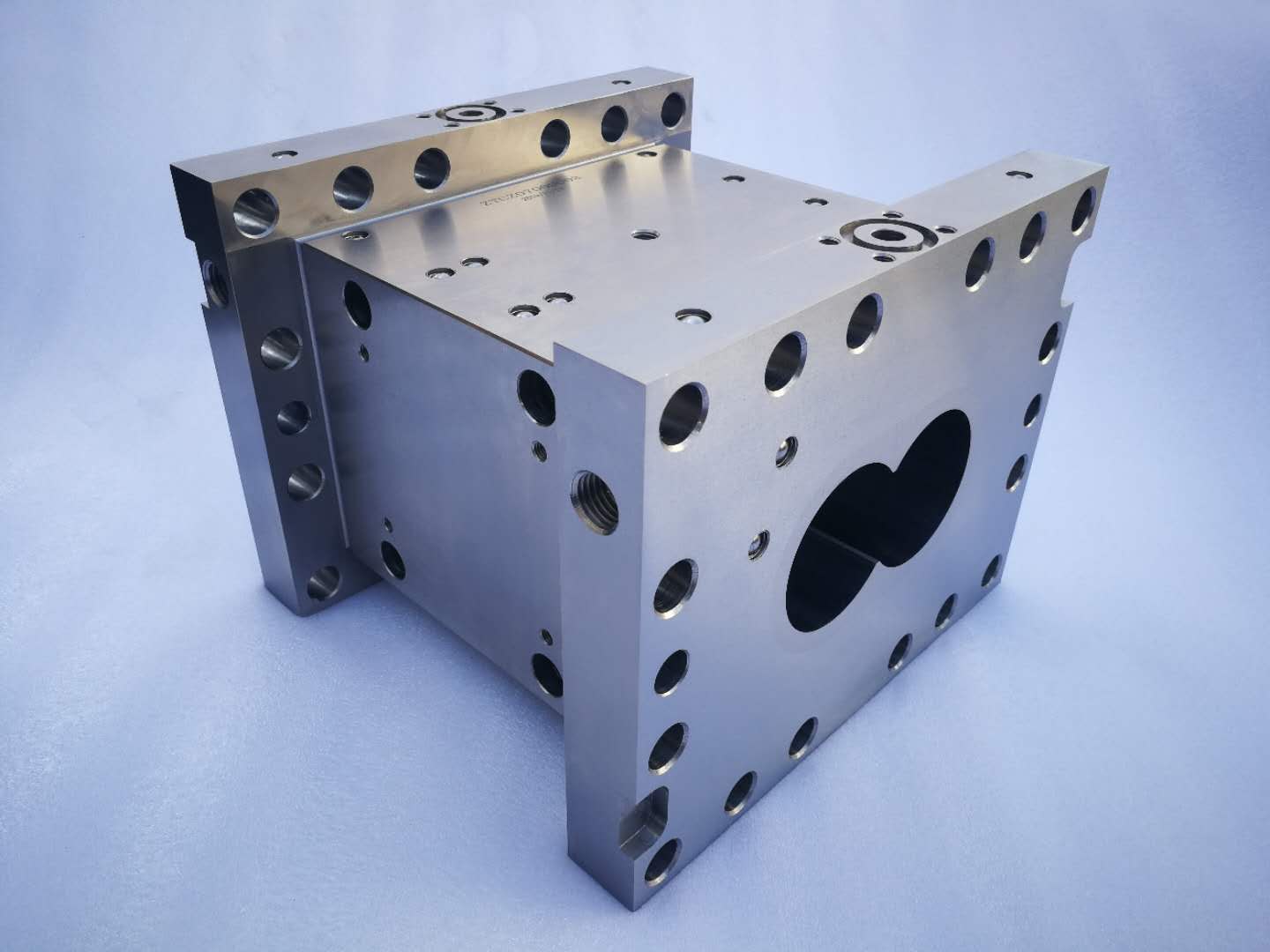
Selecting the correct metallurgy represents your most important procurement decision. You must match the metal to your specific resin. Choosing an inadequate lining accelerates internal wear. Over-engineering the lining wastes capital upfront. You need a balanced, data-driven approach.
Manufacturers create nitrided barrels by infusing nitrogen into the steel surface. This process creates a hardened outer layer. It offers a highly cost-effective upfront solution.
Use Case: These work well for general-purpose applications. You should use them for non-abrasive and non-corrosive polymers. Standard polyethylene and polypropylene usually run fine here.
Assumption Check: Many buyers assume nitrided hardness lasts indefinitely. It does not. The hardened layer remains very thin. Surface-level hardness wears rapidly if process parameters shift. Once the thin layer wears away, the softer underlying steel degrades exponentially faster.
Bimetallic variants feature a specialized alloy spun-cast into the internal bore. This creates a thick, extremely durable inner lining. The lining bonds metallurgically to the steel backing.
Use Case: You must use these for aggressive materials. Processing glass-filled fibers demands high abrasion resistance. Fluoropolymers require extreme corrosion protection. Post-consumer recycled (PCR) materials contain unpredictable contaminants. Bimetallic linings handle these harsh conditions effectively.
Cost vs. Value: These require higher initial capital expenditure. However, they yield significantly superior lifecycle value. The deep-layer wear and corrosion resistance keep lines running longer. You avoid frequent replacements.
You must identify your dominant wear threat before buying a new Extruder Barrel. Wear mechanisms rarely operate in isolation. However, one threat usually dominates your specific process.
Adhesive Wear: This occurs through metal-to-metal contact. Screws rub against the barrel wall. High-pressure zones force the metals together. You prevent this by matching screw flight hard-facing to the barrel lining. Ensure proper alignment during installation.
Abrasive Wear: Fillers cause this damage. Calcium carbonate, titanium dioxide, and glass fibers scrape the bore. They act like sandpaper against the metal. You combat this using tungsten carbide bimetallic linings.
Corrosive Wear: Chemical breakdown eats the metal. PVC releases hydrochloric acid if overheated. Fluoropolymers generate aggressive off-gases. You must select nickel-cobalt alloys to withstand these acidic attacks.
Table 1: Metallurgical Comparison Matrix | ||||
Barrel Type | Primary Resistance | Ideal Resins | Initial Cost | Lifespan in Harsh Conditions |
|---|---|---|---|---|
Standard Nitrided | Low Adhesive | Virgin PE, PP, PS | Low | Very Short |
Iron-Based Bimetallic | Moderate Abrasive | Lightly filled resins | Medium | Moderate |
Nickel-Based Bimetallic | High Corrosive | PVC, Fluoropolymers | High | Long |
Tungsten Carbide Bimetallic | Severe Abrasive | High glass-fill, PCR | Premium | Very Long |
Metallurgy only solves part of the equation. Geometry dictates the actual processing capability. The internal dimensions must precisely match your throughput goals. Poor geometric design leads to poor melting and low output.
The Length-to-Diameter (L/D) ratio defines the available processing area. You calculate it by dividing the flighted length by the internal bore diameter. Longer barrels provide more residence time. More residence time allows better mixing and melting. However, excessively long barrels increase torque requirements. They also risk polymer degradation for heat-sensitive materials. You must align the L/D ratio perfectly with your specific resin residence time requirements.
Application Chart: Common L/D Ratios by Material | ||
L/D Ratio | Typical Polymer Application | Processing Rationale |
|---|---|---|
24:1 | Elastomers, PVC | Minimizes heat history; prevents degradation. |
30:1 | General Purpose PE/PP | Provides standard melting and pumping stability. |
34:1 to 40:1 | Vented Applications, Compounding | Allows multiple venting zones and extensive mixing. |
You must decide between solid and vented designs. Vented barrels extract volatiles and moisture directly from the melt. This eliminates the need for expensive pre-drying equipment. However, venting introduces serious operational risks. If you improperly match the vent location to the screw design, vent flooding occurs. Melt pushes out through the vent port. This creates a massive mess and halts production. Proper screw extraction zones must align flawlessly with the vent opening.
Precise temperature profiling along the length remains critical. You achieve this through intelligent thermal zone segmentation. Engineers divide the barrel into distinct heating and cooling zones. The feed zone needs lower temperatures to prevent premature bridging. The compression zone requires steady heat to facilitate melting. The metering zone demands precise temperature maintenance. You must evaluate heating and cooling jacket integration carefully. Cast-in aluminum heaters offer excellent thermal distribution. Finned heaters combined with blower fans provide rapid cooling response.
A perfectly manufactured component still fails if installed incorrectly. Implementation errors destroy expensive equipment rapidly. You must treat installation as a precise engineering exercise. Field alignment directly impacts long-term wear rates.
Deflection represents a silent equipment killer. You must address the critical necessity of proper supports. Heavy metal tubes naturally sag over long spans. Gravity pulls the center downward. Heat exacerbates this problem significantly. Thermal expansion during startup causes the structure to bow. When the tube sags, it creates an inevitable pinch point. Metal-to-metal screw contact occurs. The screw flights grind against the internal bore. This friction generates massive localized heat and destroys both components rapidly.
Steel expands when heated. You cannot stop physics. A long extrusion line might expand several millimeters lengthwise during startup. You must outline strict procedures to accommodate longitudinal expansion. When mounting to the gearbox, use proper sliding supports at the discharge end. Never bolt both ends rigidly to the floor. Rigid bolting forces the expanding metal to buckle upward or downward. Sliding supports allow the equipment to grow linearly without creating internal stress.
You need to understand radial clearance. This defines the tiny gap between the screw flights and the inner wall. As production runs, this gap slowly widens. You must measure and track this tolerance drift consistently. Manufacturers establish strict clearance guidelines for new equipment. At what percentage of wear does product quality begin to statistically fail? A general industry rule suggests trouble begins when clearance doubles. Once clearance increases, polymer slips backward over the flights. Pressure drops. Output decreases. Melt temperatures fluctuate wildly. You must pull the screw and map the internal bore annually to catch this drift early.
Level the gearbox base perfectly before attaching the new vessel.
Use optical or laser alignment tools to ensure the bore matches the drive quill center.
Adjust all support saddles while the system runs at full operating temperature.
Tighten flange bolts using a calibrated torque wrench in a star pattern.
Procuring heavy industrial equipment requires rigorous vetting. You cannot rely solely on glossy brochures. You need verifiable data. The vendor you choose becomes a long-term operational partner. Evaluating their engineering capabilities saves you from future production nightmares.
Never accept delivery without documented proof of precision. You must demand laser-alignment data. Request straightness certification prior to shipment. A common metric is Total Indicator Runout (TIR). TIR measures the maximum deviation from a perfect cylinder. If the TIR exceeds acceptable limits, the screw will rub. Ensure the vendor provides detailed inspection reports detailing the TIR every few inches along the bore. Hold them strictly accountable to OEM tolerances.
Global supply chains present significant operational risks. You must evaluate the risk of overseas shipping delays. A cheaper foreign option costs more if your line sits idle for three months waiting for a boat. Compare this against manufacturers holding localized blank inventory. Vendors with local stock and rapid machining capabilities respond faster to emergencies. They get your line running weeks ahead of overseas competitors.
A good vendor offers comprehensive lifecycle support. Assess whether they provide inspection, relining, and rebushing services. You do not always need to buy a net-new replacement. Skilled machinists can bore out a worn Extruder Barrel and insert a new bimetallic sleeve. This relining process extends the asset's lifecycle significantly. It requires less capital. Partner with vendors who actively want to repair your equipment rather than just selling you new metal.
Do not wait for a catastrophic failure. Take proactive steps today. We strongly recommend initiating an on-site wear audit immediately. Pull your screw during the next scheduled maintenance window. Map the internal diameters accurately. Provide these current wear-data logs to potential vendors. Ask them for a custom material recommendation based on your specific historical wear patterns. Data-driven procurement always yields the best technical results.
The extruder barrel remains the absolute foundation of your extrusion process. It is the heart of polymer melting and pressure generation. Compromises in metallurgy or installation support mathematically erode your profit margins over time. Proper selection ensures consistent melt quality and stable production rates. Precise alignment prevents premature mechanical failure. You must actively monitor internal clearances to maintain process control. Schedule a technical consultation with an engineering expert soon. Request a thorough bore inspection. Review a customized bimetallic upgrade proposal based on your specific resin formulations. Protecting your core processing equipment ensures optimal yields and reliable daily operations.
A: Technicians measure internal wear using bore micrometers or specialized electronic bore gauges. They perform this during scheduled maintenance shutdowns. They insert the gauge down the entire length, taking precise diameter readings at regular intervals. They compare these current measurements against original OEM specifications to map exact wear profiles.
A: Replacement becomes necessary when wear exceeds 10-15% of the original flight clearance. At this point, you typically see a 20%+ drop in production output. You must also replace it if severe internal scoring or deep gouging prevents effective rebushing or relining operations.
A: You must ensure strict metallurgical compatibility. A bimetallic lining possesses extreme hardness. It requires a compatible screw flight hard-facing, such as Colmonoy or Stellite. The screw flights must be slightly softer than the barrel wall. This specific difference in hardness prevents severe galling and catastrophic metal adhesion.


