


Views: 0 Author: Site Editor Publish Time: 2026-06-23 Origin: Site


Premature extruder shaft failure halts production abruptly. This sudden breakdown turns a standard consumable into a major driver of unplanned downtime. We know unexpected breaks cause massive operational headaches. Operators scramble to restore lines quickly. A broken component ruins production schedules instantly. Whether you process highly filled abrasive polymers or corrosive chemical compounds, your core components suffer constantly. Glass fibers and carbon additives scour internal surfaces mercilessly. Acidic materials eat away at vital metals over time. The central shaft always bears the brunt of this intense mechanical and environmental load.
Achieving true wear resistance requires a careful, balanced approach. You must balance base material toughness against advanced surface hardness treatments. Precise manufacturing techniques matter significantly in the real world. You cannot rely on a single miracle alloy to solve everything. We will explore how to engineer a lasting, robust solution. You will learn to optimize equipment for your specific extrusion lines effectively.
A true wear-resistant extruder shaft balances core toughness (to prevent snapping under torque) with surface hardness (to resist abrasion).
Surface treatments like nitriding and bimetallic cladding are necessary when processing abrasive or corrosive materials.
Manufacturing techniques dictate cold rolling shaft durability, impacting fatigue life and structural integrity.
Vendor evaluation should prioritize verifiable material certifications and a robust shaft customization service over off-the-shelf generic parts.
Physical breakdown represents only one part of the problem. We must view wear as a catalyst for severe operational failures. Worn components reduce throughput drastically. They degrade product quality over time. Maintenance bottlenecks inevitably follow these sudden failures. Extrusion lines demand consistent internal geometry to function properly. Once dimensions shift, shear rates change unpredictably. This variation ruins polymer melt consistency. Let us examine the primary forces destroying your equipment.
Many operators ignore early signs of wear. They wait for catastrophic failure before acting. You should track throughput drops as early warning signs. We categorize the destructive forces below.
Abrasive Wear: This happens constantly during operation. Hard compounding fillers physically scour the metal surface. Glass fibers and calcium carbonate scrape aggressively against the steel. Metal powders act like heavy sandpaper during extrusion. Over time, these fillers remove critical material from the splines. Clearances open up, reducing pumping efficiency.
Corrosive Wear: This attacks the metal chemically. Acidic polymers degrade the metal structure from the inside out. PVC and fluoropolymers release harsh, acidic byproducts during processing. High melt temperatures accelerate this chemical degradation dramatically. The resulting pitted surface weakens the overall structural integrity.
Adhesive Wear & Torsional Fatigue: These forces destroy structural integrity silently. Metal-to-metal contact causes localized heating spots. Cyclic loading stresses the core continuously during every rotation. These intense forces lead to micro-welding and severe galling. Eventual catastrophic shear failure becomes completely unavoidable.
Let us evaluate base metals based on application severity. You cannot apply one material to every scenario successfully. Different polymers demand specific metallurgical properties. We categorize solutions to simplify your selection process.
Standard tool steels offer baseline performance for mild environments. Materials like 4140 and 4340 provide excellent machinability. They process easily during manufacturing. However, they prove completely insufficient for highly abrasive compounds. You must apply secondary treatments to survive harsh production runs. Without treatments, standard steels degrade rapidly. They bend before they break, which helps during occasional pressure spikes. But they lack the carbides necessary to resist scratching.
Upgrading becomes necessary for demanding industrial applications. You should consider implementing a high-torque alloy steel shaft. D2 and H13 represent excellent, robust choices. Specialized powder metallurgy steels perform even better under stress. Alloying elements improve baseline resistance significantly. Chromium adds vital corrosion protection. Molybdenum and vanadium increase tensile strength. High-chromium alloys form strong carbides. These microstructures act like microscopic rocks within the steel matrix. They deflect abrasive glass fibers easily.
We must face a trade-off reality check regarding metallurgy. Maximizing hardness often reduces core toughness. Hard metals naturally become brittle. This brittleness increases the risk of brittle fracture under load. High torque startups can easily snap an overly hard component. You want strength without excessive brittleness. Imagine a glass rod versus a rubber stick. We aim for a hybrid structure entirely. We want a ductile core and a glass-like surface.
Material Category | Common Alloys | Primary Advantage | Notable Limitation |
|---|---|---|---|
Standard Tool Steels | 4140, 4340 | Highly machinable, flexible | Poor standalone abrasion resistance |
High-Chromium Alloys | D2, H13 | Excellent corrosion resistance | Can be brittle if over-hardened |
Powder Metallurgy | CPM 9V, CPM 10V | Maximum wear resistance | Difficult to machine, high stress risk |
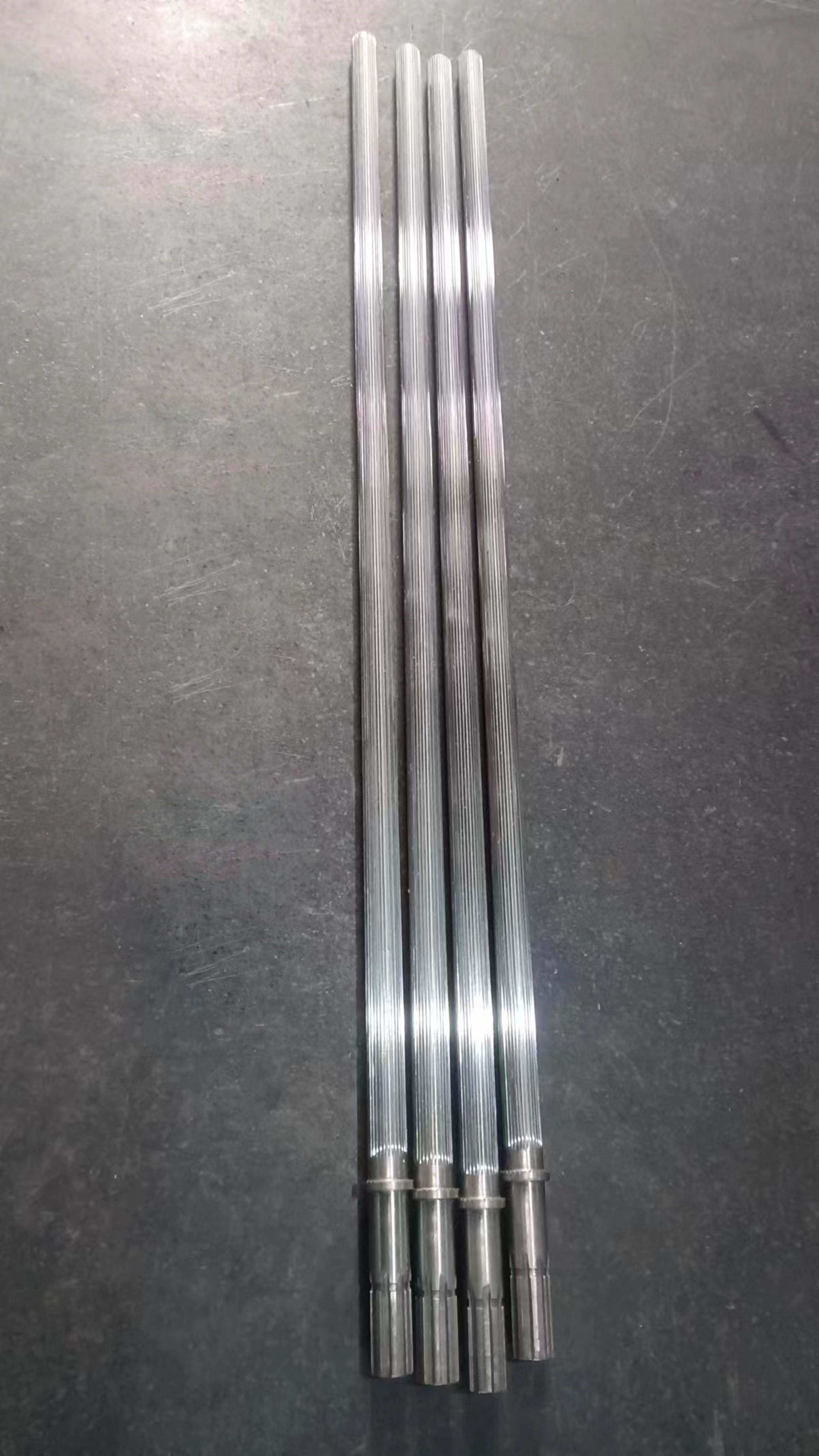
Base materials only provide the initial foundation. Processing methods determine final field performance entirely. We evaluate components based on how manufacturers treat them. A poor treatment process ruins excellent steel.
Nitriding and carburizing offer excellent case-hardening methods. These processes create a hardened exterior shell. Crucially, they maintain a ductile, shock-absorbing core underneath. This combination handles sudden impact effectively. Nitriding introduces nitrogen into the steel surface. This process occurs in a high-temperature gas furnace. The nitrogen atoms lock the steel lattice in place. This locking mechanism prevents surface yielding. Operators favor nitriding for moderately abrasive environments. It prevents galling during assembly and disassembly.
Bimetallic and carbide coatings handle extreme, punishing environments. Manufacturers use High Velocity Oxygen Fuel (HVOF) techniques. HVOF sprays semi-melted carbide particles at supersonic speeds. They impact the base metal and bond mechanically. Plasma Transferred Arc (PTA) welding uses a plasma arc to melt a powder overlay. This creates a true metallurgical bond. You apply these costly layers only where necessary. Coating the entire geometry wastes resources. We recommend targeting the highest-wear zones specifically.
Manufacturing techniques profoundly influence overall longevity. Solely cutting or machining metal weakens its natural structure. We must look at alternative shaping methods. Proper cold working processes align the internal grain structure correctly. This alignment maximizes cold rolling shaft durability. It significantly improves fatigue resistance. Dimensional stability remains completely intact under severe thermal stress. Cold rolled threads resist shearing far better than cut threads. Always verify the depth of your case hardening before installation.
You need a logical method to shortlist replacements. Match specifications directly to your production realities. Do not over-engineer or under-spec your vital components. We recommend following a structured, step-by-step evaluation process.
Assess the polymer matrix carefully. High-fill abrasive materials require advanced coatings to survive. Highly corrosive materials demand high-chromium alloys immediately. Specialized nickel alloys work best for severe chemical exposure. You must know your compound intimately.
Analyze torque against geometry constraints. Deep-flighted designs possess less cross-sectional area. Multi-spline configurations also reduce the available core mass. Involute splines distribute stress better than straight-sided splines. These geometries make high-yield-strength alloys non-negotiable. A weak core will snap if the geometry runs too thin.
Demand verifiable quality metrics from vendors. Always request detailed material test reports (MTRs). Check straightness tolerances to ensure proper internal alignment. Review runout specifications meticulously. Document surface hardness depths on the standard HRC scale. Never accept verbal guarantees regarding material specs.
Applying this framework prevents costly missteps. You secure a wear-resistant extruder shaft tailored to your specific process. Generic evaluation criteria lead to generic results. Specificity guarantees longer production runs.
Generic replacements often fail prematurely. They lack the exact specifications required by unique operations. Off-the-shelf parts assume standard operating conditions. We know actual production rarely matches standard conditions perfectly. Your plant has unique thermal and mechanical variables.
We highly recommend utilizing a dedicated shaft customization service. Customization mitigates operational risk effectively. You stop guessing and start engineering.
Reverse engineering provides crucial, actionable insights. You must measure existing wear patterns carefully. Engineers use 3D laser scanners to map the worn part. They compare this scan to the original print. This comparison reveals exactly where the most intense wear occurs. This physical data helps engineer targeted structural improvements. You can beef up specific splines based on wear data. Modifying thread profiles also extends operational life significantly. We learn from how the previous component failed.
Prototyping and testing validate the new design safely. Implement a trial component on a single line first. Monitor its performance closely under load. Gather data before approving a full plant rollout. This cautious approach prevents massive facility-wide failures.
Conduct thorough vendor due diligence always. Select a partner capable of precise metallurgical analysis. They must offer customized heat treatments in-house. Reliable post-installation support remains absolutely essential. A vendor should stand behind their engineering. They must help you interpret performance data over time.
Wear resistance functions as a complex engineered system. It never relies on a single isolated metric. You must align base alloys and surface treatments carefully. Manufacturing processes must match the specific operational environment perfectly. A holistic approach guarantees better mechanical stability.
We suggest auditing your current replacement cycles immediately. Review material failure logs thoroughly to spot trends. Use this information to build a data-backed procurement specification. This proactive step guarantees success for your next upgrade. Stop reacting to breaks and start engineering for longevity.
A: Lifespan is entirely application-dependent. A standard shaft running unfilled PP might last years. Conversely, processing 40% glass-filled PA66 might reduce its lifespan to months. The ultimate goal is predictable, scheduled replacement rather than sudden, catastrophic failure.
A: No. Extreme hardness inherently increases brittleness. If a component is too hard throughout its structure, high-torque startups can cause it to snap easily. The ideal solution involves a hard surface combined with a tough, ductile core.
A: Consider an upgrade immediately if you experience frequent spline shearing or torsional twisting. You should also upgrade when transitioning to processing higher-viscosity or highly filled polymers that exert greater mechanical stress on equipment.
A: In some cases, minor wear can be repaired. Technicians perform localized welding and remachining. However, underlying structural fatigue cannot be reversed. A thorough metallurgical inspection remains absolutely required before attempting any refurbishment process.


