


Views: 0 Author: Site Editor Publish Time: 2026-06-02 Origin: Site


Twin-screw extrusion routinely demands complex material formulations. Manufacturers frequently need to introduce low-bulk-density, highly abrasive, or shear-sensitive fillers into the melt. Materials like talc, calcium carbonate, and delicate glass fibers present substantial handling challenges. Their physical properties make direct incorporation incredibly difficult.
Standard top-feeding methods usually fail when handling these lightweight or abrasive materials. You will often encounter severe fluidization in the main feed throat. Particles bridge together, block the intake, and create frustrating throughput limitations. These feeding bottlenecks disrupt continuous operations. They also severely degrade final product quality.
A specialized side feed screw acts as the critical mechanical intervention to solve these operational issues. It actively stabilizes feed rate accuracy and reduces air entrapment. It maximizes volumetric throughput entirely. Best of all, it achieves these results without compromising the primary polymer melt quality or degrading the filler additives.
Optimized side feed screw geometries directly prevent filler fluidization, resolving the primary bottleneck in high-capacity filler feeding in compounding.
Upgrading specific side feeder screw elements reduces abrasive wear and extends the operational lifespan of the main compounding extruder.
Proper evaluation of side feed technology requires aligning screw pitch and clearance tolerances with the specific bulk density and morphology of the filler material.
Integrating the right side feeding strategy improves overall twin-screw blending performance by introducing fillers directly into the polymer melt sequence.
Inefficiencies in feeding translate directly to lost revenue. Reduced output rates significantly limit your overall production capacity. When feeding mechanisms fail, poor filler dispersion inevitably follows. This inconsistency produces high scrap rates. Defective batches waste valuable raw materials and consume expensive machine time.
Production lines often face specific, recurring bottlenecks when feeding problematic fillers. Understanding these restrictions helps you target the right mechanical upgrades.
Fluidization and Surging: Low-density fillers actively resist being pulled into the main melt stream. They float or "fluidize" above the rotating screws. This behavior causes violent pressure fluctuations within the barrel.
Air Entrapment: Fluffy powders contain massive volumes of trapped air. This air moves upstream or downstream if not vented properly. Trapped gas limits overall compounding potential and causes voids in the final extrudate.
Bridging and Stagnation: Cohesive powders clump together in the feed chute. They block the pathway, starving the extruder and halting production entirely.
Continuous mass-flow accuracy remains vital for quality control. Inconsistent feeding destroys final formulation tolerances. If the filler volume fluctuates, the mechanical properties of your final composite will vary. A localized drop in glass fiber content weakens the molded part. A sudden surge in calcium carbonate makes the polymer brittle. Feed rate accuracy dictates your ability to meet strict customer specifications.
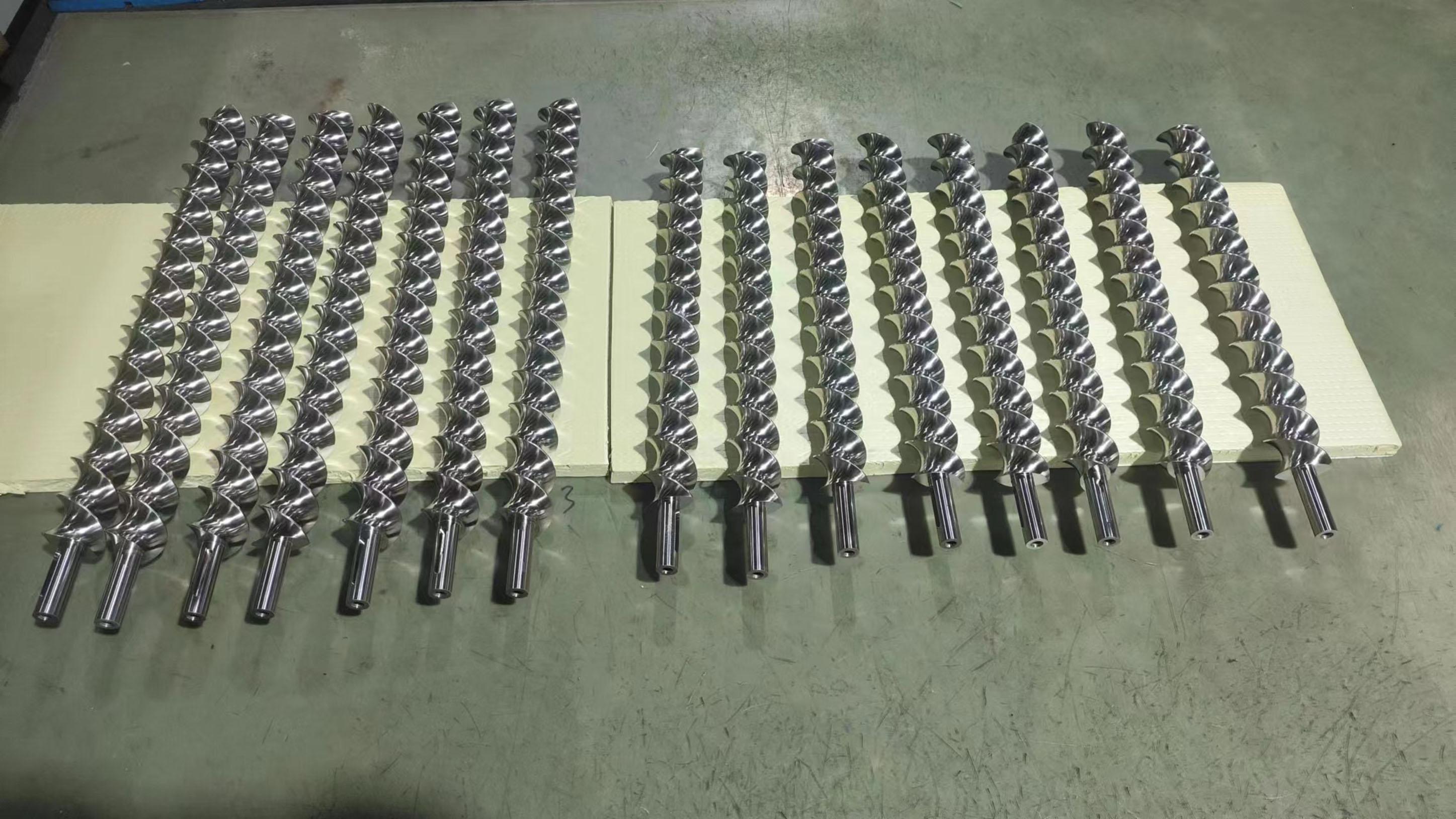
A side feeder functions as an independent, modular extruder attached laterally to the main process section. It actively conveys and compresses particulate matter directly into the main extruder barrel. The rotating flights of the screw physically grab the powder. They push the material forward under controlled pressure, forcing it into the advancing polymer melt.
Displacing entrained air is perhaps its most crucial function. Intermeshing profiles forcefully compact the filler as it travels toward the main barrel. This compaction squeezes the air out of the powder bed. The mechanical design forces this released air back out through the feeder’s rear venting system. It prevents gas from entering the main melt stream. This action stabilizes internal barrel pressure.
Feeding from the side also protects the main melt matrix. Introducing fillers downstream allows the polymer matrix to melt completely beforehand. You avoid grinding solid polymer pellets against abrasive glass fibers or hard minerals. This sequence reduces unnecessary shear. It drastically cuts down abrasive wear on the main melting zones, preserving your primary screw profile.
Specifying the right components requires evaluating both the physical shape and the material construction of the screw. You must match these solution categories to your specific application needs.
Geometry dictates how material flows through the side feeder. Different bulk densities require distinctly different flight profiles to achieve optimal feeding.
Deep-flighted elements work best for low-density, fluffy powders like fumed silica or light talc. These designs maximize the open volume between the flights. They capture large amounts of airy material and transport it efficiently. Conversely, tightly pitched elements suit dense, free-flowing additives. They provide aggressive conveying and higher compression, preventing dense particles from slipping backward.
You must carefully balance the side feeder RPM, the pitch angle, and the main extruder's intake capacity. Pushing material faster than the main screw can accept it causes immediate problems. It leads to material backing up into the feed chute. Upgrading your side feeder screw elements ensures optimal volume transfer without overwhelming the primary process section.
Wear resistance dictates component longevity. Abrasive fillers aggressively attack the metal surfaces of your equipment. Evaluating standard versus high-abrasion plastic compounding screw parts helps you optimize operational lifespans.
Standard nitrided steel offers basic protection. It works adequately for soft fillers like calcium carbonate. However, it fails quickly when processing highly abrasive materials like glass fibers or titanium dioxide. Powder Metallurgy Hot Isostatic Pressed (PM-HIP) tool steels provide a massive upgrade in durability. For extreme environments, proprietary carbide encapsulation offers maximum wear defense.
Material Selection Table for Side Feed Screws | |||
Material Type | Wear Resistance Level | Ideal Filler Application | Typical Lifespan Expectancy |
|---|---|---|---|
Standard Nitrided Steel | Low to Moderate | Talc, Calcium Carbonate, Color Pigments | Baseline |
PM-HIP Tool Steels | High | Short Glass Fibers, Mica, Wood Flour | 3x - 4x Baseline |
Tungsten Carbide Coating | Extreme | Long Glass Fibers, Titanium Dioxide, Ceramic Powders | 6x - 8x Baseline |
You must balance the upfront component investment against the expected lifespan. Choosing premium alloys prevents frequent machine shutdowns. It reduces maintenance labor and keeps your lines running longer between rebuilds.
Connecting component choices to measurable production outcomes validates your engineering decisions. The right side feeding setup transforms the entire compounding process.
Throughput gains represent the most visible improvement. Side feeding physically bypasses the primary feed throat's volume limits. Standard feed throats quickly choke on high volumes of lightweight powder. Pushing these fillers through a downstream side port frees up the main throat for polymer pellets alone. This division of labor enables significantly higher overall line rates.
Performance Summary Chart: Top Feeding vs. Side Feeding | ||
Process Metric | Standard Top Feeding | Optimized Side Feeding |
|---|---|---|
Volumetric Throughput | Severely Limited by Fluidization | Maximized (Bypasses Main Throat) |
Air Entrapment | High (Causes surging at die) | Low (Air vents backward) |
Main Screw Wear | Accelerated in Melting Zone | Minimized (Melt forms before filler) |
Feed Rate Accuracy | Inconsistent due to bridging | Highly Stable and Predictable |
Dispersion quality also sees dramatic improvements. Injecting fillers into a pre-established melt pool facilitates rapid wetting out of the particles. Synchronized main-screw mixing elements immediately capture the filler. This immediate incorporation improves both distributive and dispersive mixing. It breaks down agglomerates while spreading the particles evenly throughout the polymer matrix.
However, performance gains depend heavily on main-screw compatibility. A poorly designed intake zone on the main screw will throttle even the best side feeder. The main screw must feature deep-flighted, high-volume conveying elements exactly where the side feeder attaches. If the main screw cannot clear the incoming material fast enough, the entire system backs up.
Engineers face practical challenges on the production floor during installation. Recognizing these realities prevents catastrophic hardware failures and ensures smooth operations.
Mechanical Clashing: Clearance and alignment tolerances require extreme precision. Misaligning the side feed unit causes the rotating flights to scrape against the main extruder barrels. This friction generates metal shavings, contaminates your product, and destroys expensive tooling.
Thermal Expansion: Metal expands under operating temperatures. You must account for thermal growth when setting gaps between the side feeder and the main barrel.
Venting Maintenance: Vents can clog if overfilled. Operators must regularly inspect rear vent ports to ensure trapped air can escape freely.
Modern side feeder designs prioritize changeover efficiency. They facilitate rapid cleaning during formulation changes. Quick-release clamps and swing-away mounting arms allow operators to access the screws easily. This modularity reduces machine downtime significantly. You can swap complete screw assemblies in minutes rather than hours.
Calibration dictates your overall success in filler feeding in compounding. You must synchronize the upstream gravimetric loss-in-weight feeder with the volumetric capacity of the side unit. The gravimetric feeder doses the exact mass required. The side feeder must rotate fast enough to convey that volume instantly. Failing to match these rates causes material packing, torque spikes, and eventual shear pin failures.
Optimizing particulate incorporation is rarely solved by adjusting software parameters or tweaking temperatures alone. It requires targeted mechanical upgrades directly at the introduction point. A properly engineered side unit acts as the ultimate safeguard against fluidization, bridging, and abrasive wear.
Before requesting quotes for new components, audit your current processes. Evaluate your typical filler bulk densities, inspect your existing wear rates, and identify your current throughput ceilings. Understanding these baseline metrics ensures you specify the correct geometry and metallurgy for your application.
Take proactive steps to eliminate feeding bottlenecks today. Consult an extrusion tooling engineer to schedule a dimensional wear audit. Request a customized screw profile recommendation tailored strictly to your most challenging filler materials.
A: Look for visible material backing up into the feed chute. You might also notice excessive powder venting out of the side feeder's rear port. Frequent, unpredictable torque spikes in the main drive motor strongly indicate material packing at the intake zone.
A: Partially. A properly designed screw actively prevents material packing and surging. However, true feed rate accuracy ultimately relies on the precision of the upstream gravimetric feeder supplying the side unit. Both systems must work in perfect synchronization.
A: For high-abrasion applications like glass fiber, PM-HIP tool steels or proprietary carbide encapsulations perform best. They offer significantly better lifecycle ROI than standard nitrided steel. Their extreme durability drastically reduces maintenance intervals despite higher initial upfront investments.
A: No. Over-speeding the side screw without sufficient intake capacity on the main twin-screw profile causes severe problems. It results in localized friction, severe material degradation, and potential mechanical clashing. The main screw must pull the material away efficiently.


