


Views: 0 Author: Site Editor Publish Time: 2026-07-01 Origin: Site


Excessive barrel degradation hurts daily operations severely. It does not just damage industrial equipment. It causes severe blowback for your facility. You face reduced throughput almost immediately. Energy consumption spikes to dangerous levels. Scrap rates climb out of control rapidly. Many operators accept this situation as an inevitable operational tax. We recommend framing it as a manageable financial variable instead. You hold the power to control equipment degradation. Proactive management protects your profit margins effectively. Every millimeter of steel lost translates directly into lost revenue. This article provides an evidence-based framework for you. We will help you identify specific wear mechanisms accurately. You will learn to evaluate strategic material upgrades. We also clarify how to decide between repair and replacement. Read on to master these crucial maintenance decisions and optimize your daily production.
Identifying the specific wear mechanism (abrasive, corrosive, or adhesive) is a prerequisite for selecting the correct metallurgy.
Upgrading to a wear-resistant extruder barrel (e.g., bimetallic alloys) yields a higher ROI than repeatedly replacing standard nitrided components.
Integrating a replaceable barrel liner in high-wear zones can drastically reduce long-term maintenance costs.
Deciding whether to utilize a barrel repair service or purchase a new unit depends on current clearance tolerances, lead times, and production demands.
The gap between the screw flight and barrel wall dictates your volumetric efficiency. As clearance increases, polymer melt slips backward over the flights. Industry professionals call this phenomenon backflow or pressure flow. It reduces output per RPM significantly. Your extrusion line loses its ability to convey material efficiently. The plastic stays inside the heating zones much longer. This extended residence time risks severe polymer degradation. Melt temperature uniformity suffers greatly. Unmanaged barrel wear in extrusion lines ultimately forces you to run machines longer to hit production targets.
Operators usually attempt to mask throughput drops using brute force. They increase screw speeds to compensate for the lost output. They turn up heater band temperatures to maintain melt flow. These actions drive up utility costs sharply. The motor draws more amperage to push the slipping polymer forward. The gear reducer endures unnecessary mechanical stress. You end up paying more money for electricity while producing less usable product. This inefficient cycle drains operational budgets quietly but continuously.
Inconsistent melt pressure disrupts the entire extrusion process. Die flow becomes unstable and unpredictable. This instability creates out-of-spec end products rapidly. You will see unacceptable dimensional variations in pipes, films, or custom profiles. Wall thickness fluctuates beyond acceptable quality control limits. Physical properties of the polymer degrade due to uneven shear heating. These variations turn premium raw resins into expensive industrial scrap. Eliminating these quality fluctuations requires addressing the mechanical root causes directly.
You cannot solve equipment degradation without identifying the specific attacker first. Material science requires matching the solution to the exact threat profile. We classify these root causes into three primary categories. Each leaves distinct visual evidence on the steel surfaces.
Processing highly filled resins triggers severe abrasive wear. Glass fibers act like microscopic cutting tools against the steel. Calcium carbonate and metal powders scour the inner surfaces relentlessly. This damage typically occurs in the transition and metering zones. The polymer melts in these areas, exposing the hard filler particles directly to the metal. High shear rates accelerate this scouring action. The continuous friction strips away the protective hardened layer of the metal.
Aggressive polymers release acidic gases during processing. Rigid PVC releases hydrochloric acid when exposed to high heat. Fluoropolymers and complex flame retardants break down similarly under thermal stress. They chemically attack the steel matrix. You will notice distinct pitting and surface degradation upon inspection. This microscopic pitting traps degraded polymer. The trapped material burns and releases more corrosive gases, worsening the destruction cycle continuously.
Metal rubbing directly against metal causes adhesive wear. Poor equipment alignment usually triggers this dangerous friction. Bent screws scrape heavily against the inner diameter. Inadequate physical support at the feed throat contributes to it. Friction literally welds microscopic pieces of metal together momentarily. The continuous rotation tears these welded pieces away violently. It causes rapid, localized destruction. You must intervene immediately when you detect galling.
Summary of Common Wear Mechanisms
Wear Category | Primary Triggers | Typical Locations | Visual Effect |
|---|---|---|---|
Abrasive | Glass fibers, calcium carbonate, metal powders | Transition and metering zones | Smooth scouring, washed-out appearance |
Corrosive | PVC off-gassing, fluoropolymers, flame retardants | Venting zones, metering section | Surface pitting, dark discoloration |
Adhesive (Galling) | Poor alignment, bent screws, inadequate support | Feed throat, localized contact points | Torn metal, deep scoring, rapid destruction |
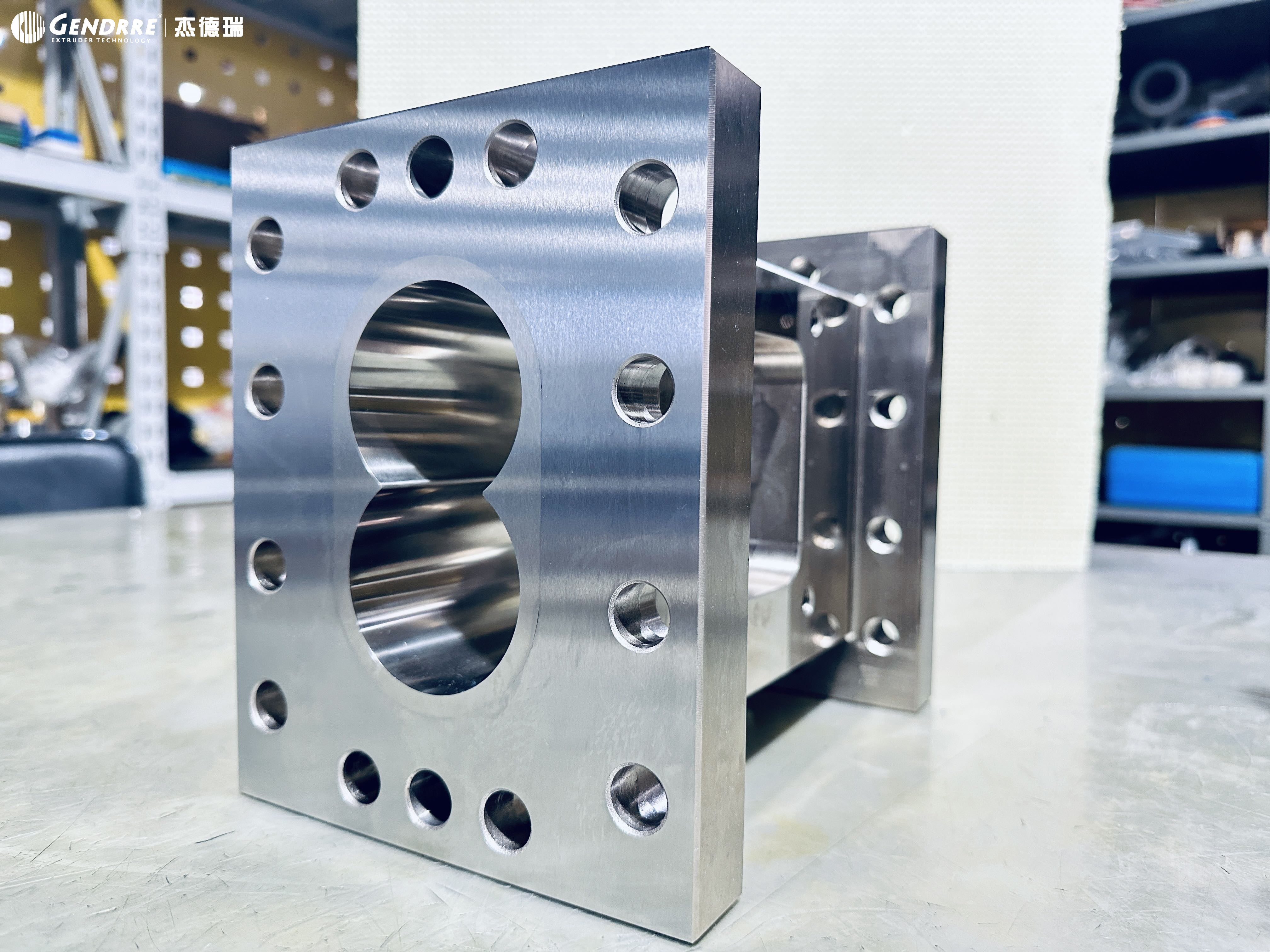
Standard nitriding provides a very shallow case depth of hardness. The protective layer wears away quickly under heavy abrasive loads. Once the thin nitrided layer vanishes, the underlying soft steel degrades rapidly. Centrifugally cast bimetallic alloys offer vastly superior longevity. Manufacturers spin-cast a thick layer of complex alloys directly into the bore. Upgrading to a wear-resistant extruder barrel extends your maintenance intervals dramatically. The thicker lining maintains consistent hardness even as the internal diameter slowly expands over years of service.
You must match your metallurgy to your primary process threat. Nickel-based alloys handle severe corrosion perfectly. They resist acidic pitting from fluoropolymers effectively. Tungsten-carbide composites dominate extreme abrasion environments. They withstand high loadings of glass fiber without premature scouring. Iron-based bimetallic alloys work well for general purpose processing. Consulting an engineering specialist helps you pair the exact alloy blend to your specific resin formulations.
Sometimes you only experience severe degradation in very specific sections. Strategic integration of a replaceable barrel liner makes perfect economic sense here. You install these liners exclusively in high-stress zones. The feed throat and vent ports often degrade much faster than the rest of the machine. The pros include a lower lifetime replacement cost and highly localized repairs. You simply swap the liner instead of discarding a massive steel cylinder. The cons involve higher initial engineering setup complexity. You might also see slight thermal transfer variations across the sleeved section.
Bore gauging provides the mathematical foundation for your maintenance decisions. You must establish standard procedures using proper internal micrometers. Always measure both vertically and horizontally to detect ovality. OEM tolerance limits signal the exact moment for mechanical intervention. Typically, wear exceeding 0.15% to 0.20% of the nominal bore diameter requires immediate action. Waiting beyond this baseline threshold accelerates polymer degradation and wastes valuable energy.
Best Practices for Bore Gauging:
Clean the bore thoroughly using brass brushes before attempting any measurements.
Allow the steel to cool completely to ambient room temperature to prevent thermal expansion errors.
Measure at consistent intervals (e.g., every two inches) down the entire length of the bore.
Record all data points systematically to track historical degradation trends.
Repairing existing equipment often provides excellent value. Engaging a professional barrel repair service works well if the damage remains localized. Machinists can bore out the damaged section and press-fit a fresh sleeve. Honing and sleeving restore OEM clearances perfectly. It preserves the original pressure rating safely. The cost factor usually sits around 40-60% of a completely new unit. However, you must carefully evaluate the vendor turnaround time against the sheer cost of machine downtime. A long repair delay might cost more in lost production than buying a new unit.
Certain types of damage simply cannot be repaired safely. Severe structural bowing ruins the essential concentric alignment permanently. Deep corrosive pitting across multiple heating zones makes honing impossible. The machinists would have to remove too much steel, compromising safety. Furthermore, transitioning to a highly abrasive new polymer demands different metallurgy. If your current nitrided cylinder cannot handle the new glass-filled resin, repair is futile. You must purchase a new bimetallic unit to meet the upgraded process demands.
Strict "soak time" protocols are absolutely non-negotiable for equipment longevity. The polymer must melt completely before any mechanical movement begins. Rotating a cold screw shears unbelted plastic forcefully against the steel. This mistake destroys both components instantly. Operators must wait the full required soak time even after heater bands reach the setpoint. The core of the screw requires extra time to reach processing temperatures.
Gravity and mechanical vibration conspire to ruin concentricity constantly. Periodic laser alignment checks prevent catastrophic adhesive wear. The gearbox, feed throat, and main cylinder must stay perfectly aligned. A sagging front end places immense downward pressure on the flights. We recommend verifying the foundational leveling bolts annually. Proper physical support eliminates the metal-to-metal contact responsible for galling.
Proactive bore gauging catches minor issues before they cause catastrophic failure. We recommend establishing a strict annual inspection schedule during plant shutdowns. High-wear applications using filled resins require bi-annual checks. Do not wait for the calendar if you notice performance drops. Initiate an emergency inspection whenever volumetric throughput drops by 5-10%. Finding a small localized wear patch early allows for inexpensive sleeving.
Common Mistakes in Preventative Maintenance:
Skipping soak times to rush production startups.
Ignoring abnormal squealing noises from the feed throat area.
Failing to document dimensional measurements, making trend analysis impossible.
Using improper cleaning tools like hardened steel scrapers inside the bore.
Reducing equipment degradation requires an active, scientifically grounded approach. You must match modern material science directly to your daily production demands. Unchecked wear silently steals your profit through wasted energy and ruined polymer. We advise all plant managers to establish baseline measurements immediately for any new equipment. Audit your current scrap rates and energy bills against potential internal degradation. Proactive management eliminates surprise catastrophic failures. We strongly encourage you to request a professional bore inspection today. Consult with an experienced engineering partner to evaluate appropriate bimetallic upgrade options for your specific resin types. Taking action now secures your long-term production stability.
A: The optimal frequency depends directly on the resin type. Operations processing highly filled resins require bi-annual checks using precise internal bore gauges. Standard unfilled resins typically only require annual inspections during scheduled plant shutdowns. You should also measure immediately if you experience unexplained drops in throughput.
A: Yes, but the technical realities differ from standard nitrided units. Machinists cannot simply hone and re-nitride them. Repairing a bimetallic lining often requires over-boring the damaged section and installing a press-fit bimetallic sleeve. This process restores original clearances but requires specialized heavy machining equipment.
A: A premium bimetallic unit realistically lasts 3 to 5 times longer than standard nitrided equipment. This exceptional lifespan remains contingent on proper physical alignment and strict adherence to process temperature protocols. Running cold material will destroy even the hardest tungsten carbide lining prematurely.
A: You should consider one if your operation experiences accelerated, highly localized wear. They are best suited for machines that rapidly degrade at the feed throat or vent ports, rather than exhibiting uniform wear along the entire length. They offer a highly cost-effective, modular maintenance solution.


